


Building a Lodge in a Remote Location
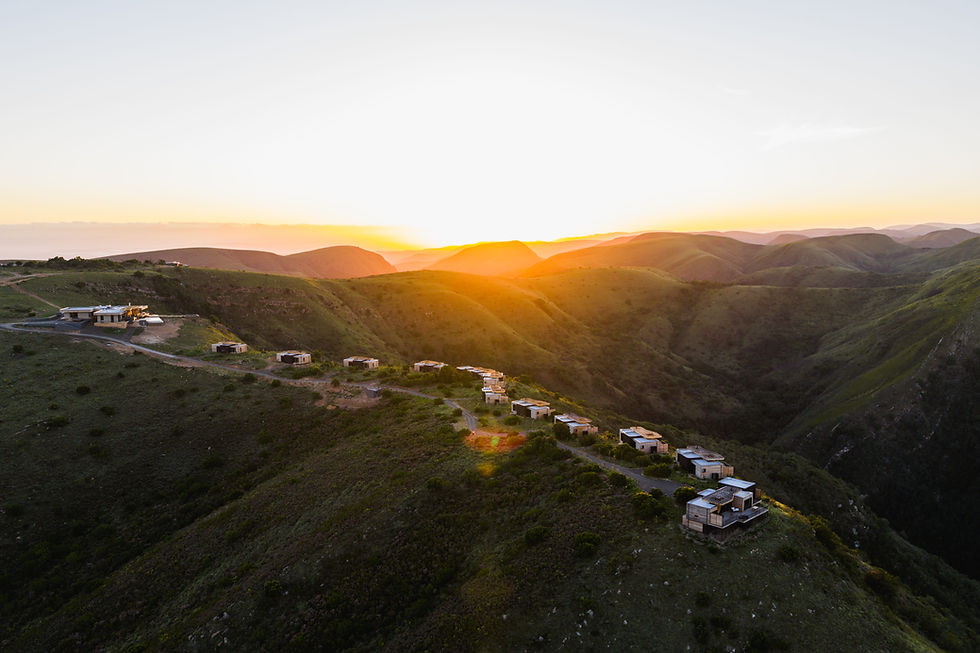
The canopies at Mantis Hiddn in Addo were made in a factory in Darling, in the Western Cape. Each unit is a piece of cross-laminated timber 13 metres long, weighing 2.2 tonnes. To reach the lodge, they had to cross into the Eastern Cape, leave the R335 at the foot of the Zuurberg and climb a single gravel track to a plateau roughly 700 metres above sea level.
Almost nothing about getting them there was standard.
That is what building somewhere remote looks like. The road decides which vehicles can reach the site, and the weather decides when. Water and power have to be solved before the lodge can open, and often before the build can properly begin. Most of these questions are settled, or quietly left open, long before construction starts.
More than 18,000 loads went up that track during the build without a single incident. That record was planned for. Vehicles were chosen to suit the track, deliveries were sequenced to spare the route from cumulative damage, and logistics sat in the design brief from the first drawings. The full project story is set out in Inside Mantis Hiddn in Addo.

Start with the route to site
Materials may come from regional suppliers, national distributors or a port of entry. The route must be checked from that starting point through to the lodge, because each leg can impose different limits.
On the final approach, bridge ratings, river crossings, gradients and turning circles determine which vehicles can reach the site and what they can carry. Where the access road is itself part of the works, it must still carry every load through the build. Road maintenance belongs in the programme and budget.
Some conservation areas restrict movement during breeding periods or limit construction traffic to set hours. The heaviest deliveries need to fit seasonal access windows as well as these restrictions.
Storage on or near site can keep work moving when access is restricted. It needs to be secure and dry, with enough capacity for the materials required during that period. Its location also needs to allow for rehabilitation afterwards.
Design choices that work on site
The delivery team should be involved alongside the designers, conservation advisers and operator during master planning. That is when access, available skills and infrastructure can still influence the specifications and construction methods, as well as the timing of the build.
Local supply is worth assessing before specifications are finalised. Regional suppliers and craftspeople can often provide timber, stone and joinery that suit the setting and can be repaired or replaced nearby. Imported finishes still have a place, but their true cost includes freight, handling, breakage and replacement lead times, along with the skills needed to maintain them.
Communities near remote sites often have strong general building skills. Specialist trades, including off-grid electrical installers, treatment plant technicians and commissioning engineers, may need to travel in. Their accommodation, transport and rotation schedules belong in the budget. Commitments to local employment also need time for supervision and skills transfer.
A system that local teams can assemble and service may suit the lodge better over the long term than one that requires a visiting specialist whenever it needs attention.
What to order and when
Glazing systems, kitchen equipment, battery storage, sanitaryware and specialist fittings can take months to reach site. These items often set the pace of the build. The programme needs to show when each specification must be settled, when the order and deposit are due, and when delivery is required.
An early order protects the programme when the specification is settled. If the design changes after an order has been placed, the owner may face extra costs. Items that are firmly agreed can be committed first.
Procurement deposits, specialist equipment and contractor mobilisation can all need funding before much building progress is visible. The cash-flow plan needs to allow for those commitments, with procurement and funding worked out together.
Each mobilisation of heavy plant to a remote site carries a cost. Sequencing the work to limit repeat visits can reduce that expense.
Contingency should reflect the particular risks of the site. Freight rates and ground conditions may call for a budget allowance; seasonal access and approval timing may need flexibility in the programme. Some risks can be reduced through the specification itself, for example by choosing a system that can be repaired locally rather than one with a long replacement lead time.
Services and approvals
Contractors need power, water and basic communications before the main works can proceed. That usually means temporary power and a temporary water supply, which may have to be trucked in.
The permanent services typically include solar generation with battery storage and backup, boreholes with storage, and on-site wastewater treatment. Bringing permanent power and water forward where the sequence allows can cut fuel and water deliveries during construction. Installation and commissioning still need to be coordinated with the buildings these systems serve.
Environmental authorisation is often one of the longest items in the programme. The applicable process, specialist studies and public participation all affect the timeframe, as do the quality of preparation and any changes to the project. Concession or lease conditions can also set footprint limits, working hours, employment commitments and rehabilitation obligations.
Building plan approval, occupancy certification, liquor licensing and, where there is an airstrip, aviation approvals each have their own lead times. In South Africa, star grading is voluntary and separate from these legal permissions, although many operators pursue it before opening. All of these need a realistic place in the programme well before the final month.
Looking after the land during construction
Laydown areas, haul routes and worker accommodation should be planned with rehabilitation in mind. Responsibility for that work needs to be agreed before construction starts.
Trees and root zones need protection, and stockpiles must be kept clear of drainage lines. Environmental supervision, often through an appointed environmental control officer, monitors compliance with the conditions attached to the approval.

Ready for the first guests
Opening preparations begin well before the buildings are complete. Power, water and wastewater systems must be commissioned, staff recruited and trained, and operating supplies and guest systems ready for use. Maintenance teams must understand the systems they will inherit. On a remote site, staff accommodation and transport add to the planning, while every missing item is a long way away.
A show suite can be useful for sales, photography and training. Its timing needs to fit the wider delivery plan. If it is finished before the permanent services are running, it may rely on temporary systems and need revisiting once they are live.
The initial opening window can become a firmer date as access, approvals and long-lead orders are secured. Operating supplies need the same attention to lead times as fittings.
The operator should be involved early enough to test the lodge before guests arrive. Where the programme allows, opening outside peak season gives agents and tour operators time to see the lodge operating before committing their guests.
Terra Nova Create's role
Terra Nova Create acts as the owner's representative through delivery and works with your chosen or preferred suppliers as well as recommending the contractors, architect and operator best for your particular project. The team coordinates delivery, oversees the programme and advises on procurement and sourcing, while helping protect design intent during construction. Work also covers the coordination of furniture, fittings and operating equipment, operational readiness and handover.
The owner makes the decisions. Terra Nova Create brings them forward at the right time, whether that means agreeing a specification, placing an order, funding a deposit or committing to an opening date.
Owners receive scheduled cost and programme reports. Urgent risks and decisions are raised as they arise, so they can be dealt with before the next report.
At Mantis Hiddn in Addo, Bruce McNicol carried the project from scouting the site to opening day, a full turnkey solution.
Questions owners often ask
When should a delivery adviser join the project?
Before the design is fixed and before construction contracts are signed. Once the site and product are broadly agreed, delivery input can join master planning and help shape specifications, procurement timing and construction methods. An adviser brought in after tender has fewer options.
What needs to be in place before setting an opening date?
The team needs a confirmed delivery route and seasonal access window, a realistic approvals programme, and a procurement schedule for long-lead items with funding in place. Permanent power, water and wastewater need a delivery plan, alongside recruitment, training and operating supplies. Until these are understood, the date remains a target. Opening in the shoulder season can give the lodge time to resolve snags and host agents before its first high season.
Does it make sense to build in phases?
Phasing can suit a larger site, uncertain demand or finance released in tranches. It brings repeat mobilisation costs and may leave the operator running a lodge beside an active construction site. Noise, dust, access and the guest experience all need planning. Infrastructure is often sized for the final scheme and installed in stages, so that decision belongs in master planning.
Discuss a remote lodge project
To discuss a remote lodge project, contact Bruce McNicol with the location, the current stage of development and the next decision that needs support. Terra Nova Create's delivery approach is outlined on the Project Delivery page.


Comments