


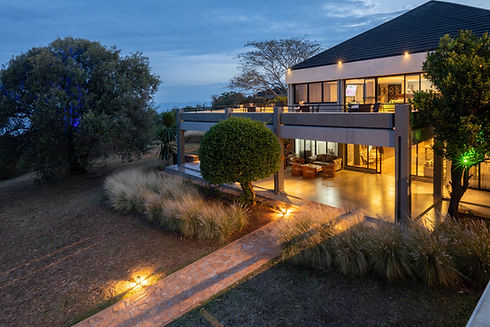

Strategic Advisory & Feasibility
Strong hospitality and development projects are rarely undone by poor ambition. They are undone by weak early decisions.
At Terra Nova Create, we help clients assess hospitality opportunities before design, procurement and delivery begin. Our strategic advisory and feasibility work is designed to test whether a project is viable, what form it should take, and how to align the site, market, concept and commercial case from the outset.
From eco-lodges and safari lodges to boutique hotels, restoration projects and greenfield developments, we help bring structure to early-stage complexity so that projects move forward with greater clarity and less avoidable risk.
Services include:
-
Market and location analysis
-
Site appraisal and opportunity assessment
-
Concept positioning and product-market fit
-
Financial feasibility and commercial scenario testing
-
Development brief creation
-
Sustainability and low-impact development strategy
-
Land-use and planning input
-
Phasing logic and implementation thinking
The objective is simple: define the right project, in the right place, for the right market, before capital is committed in the wrong direction.
Strategy & Feasibility
Frequently asked questions
What does a hospitality feasibility study include?
A hospitality feasibility study tests whether a proposed project is viable across seven dimensions: site, market demand, product fit, operating cost, capital cost, regulatory risk and exit value. The deliverable is a written report with quantified ranges, risk flags and a clear recommendation: proceed, redirect, or stop.
How long does a feasibility study take?
A primary feasibility study for a defined site runs eight to fourteen weeks. Greenfield sites with no existing infrastructure data, or projects requiring environmental impact pre-screening, can extend to twenty weeks. The first three weeks are desktop and site visit; the middle six to eight are modelling and scenario testing; the closing two to three are reporting and iteration.
What is the difference between a market study and a feasibility study?
A market study reports demand. A feasibility study tests viability, which is demand plus site, cost, product fit, regulation and exit. A market study is one input to a feasibility study, not a substitute for one. Many stranded eco-lodge assets began with this category confusion.
When is a feasibility study the wrong tool?
Three cases. Where a large site needs a master plan before feasibility for any single component. Where an investor with a strong product instinct but limited market evidence needs a smaller concept test first. Where the project is already non-viable from site visit alone, and the most useful recommendation is to not commission the study at all.
Does Terra Nova Create charge success fees on feasibility work?
No. Success fees are not used at the feasibility stage. The deliverable is paid on completion, not on the project proceeding. This removes the structural pressure on the consultant to find a project viable when it is not. Independence is the single largest determinant of report quality.
%20(2).jpg)

