


Designing with Purpose
The Art and Science of Eco-Lodge Development

In a world where travellers are increasingly seeking meaning and connection through travel, the eco-lodge has become far more than a place to stay — it’s a model for how hospitality can regenerate landscapes, empower communities, and restore balance between people and planet.
At Terra Nova Create, we believe that eco-lodge development is not simply about sustainability — it’s about creating living systems that thrive in harmony with their environment. From concept to completion, each project is an opportunity to demonstrate that exceptional design and ecological responsibility can coexist beautifully.
The Principles That Define Eco-Lodge Development
True eco-lodge development extends beyond design — it’s a philosophy built on respect for nature, culture, and community. Below are the key pillars that guide our approach at Terra Nova Create.
Environmental Responsibility
Sustainability starts with design. Every decision — from material selection to energy systems — is made to minimise ecological impact and maximise efficiency.
We prioritise renewable energy systems, such as solar and hybrid solutions.
We design for water conservation, integrating rainwater harvesting and greywater recycling.
We specify locally sourced, natural materials that reduce embodied carbon and celebrate regional craft.
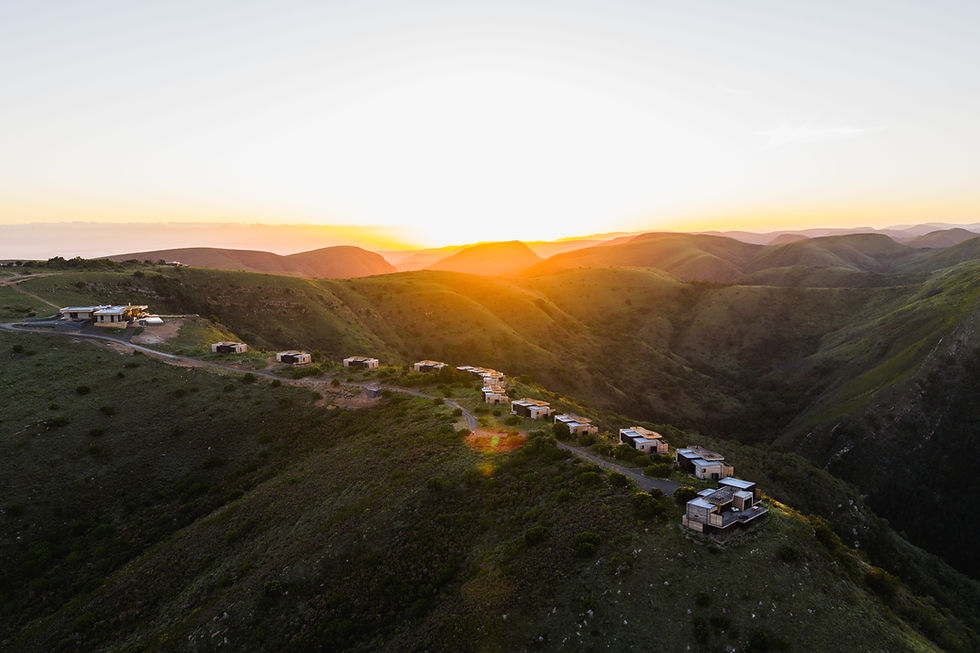
By designing lightly on the land, we ensure that the landscape remains the hero — not the architecture.

Thoughtful Waste Management
A truly sustainable lodge considers its waste as part of a closed-loop system.
We design integrated recycling and composting solutions on-site.
Construction waste is minimised through prefabrication and responsible sourcing.
Guest operations follow a zero-waste philosophy, replacing single-use items with biodegradable or refillable alternatives.
It’s not just about reducing impact — it’s about regenerating systems of balance.
Community Collaboration
No eco-lodge succeeds in isolation. The most meaningful developments are those that uplift the people who call the area home.
We partner with local communities and conservation bodies from the earliest planning stages.
Our projects create long-term employment and promote skills transfer across hospitality, conservation, and craftsmanship.
We support the creation of local supply chains — from food sourcing to artisanal décor — ensuring that economic benefits remain within the community.
When a lodge succeeds, its surrounding community should thrive alongside it.
Cultural and Landscape Integration
Design is not imported — it’s inspired.
Our lodges draw on local building traditions, materials, and craftsmanship to create architecture that feels naturally rooted.
Interiors tell stories of place through indigenous textures, forms, and artworks.
Guest experiences are curated to reflect the spirit of the region, celebrating the intersection of culture and wilderness.
A well-designed lodge doesn’t just fit into its environment — it becomes part of it.

Conservation and Education
Every eco-lodge should leave behind more than footprints; it should leave behind knowledge and regeneration.
We design projects that contribute to wildlife protection, habitat restoration, and rewilding initiatives.
Educational programming — from guided nature walks to sustainability workshops — helps guests understand their role in conservation.
By aligning operations with measurable conservation goals, we create destinations that actively give back to the ecosystem that supports them.
As Paul Gardiner, Co-Founder of Terra Nova Create, puts it:
“Conservation is not a department — it’s a mindset. Every lodge should serve as a living classroom for sustainability.”
From Vision to Reality: The Eco-Lodge Development Process
Every eco-lodge begins with a shared vision: to create a destination that inspires travellers and safeguards the land. Translating that vision into reality requires a multidisciplinary approach.
1. Site Selection & Assessment
Choosing a location is both a science and an art. We assess biodiversity value, carrying capacity, and cultural sensitivity to ensure development strengthens — not strains — its ecosystem.
2. Sustainable Design & Planning
Our design process integrates architecture, landscape, and storytelling. Each structure is positioned to optimise natural light, airflow, and views — blending seamlessly with its surroundings.
3. Responsible Construction
We partner with teams experienced in low-impact building techniques, from rammed earth and timber structures to modular systems that reduce onsite disruption.
4. Regenerative Infrastructure
Our infrastructure design focuses on energy independence, water efficiency, and circular waste systems — embedding sustainability into the backbone of each project.
5. Operational Integration
Post-opening, we provide advisory support to ensure the lodge continues to meet its sustainability goals — in procurement, waste, conservation, and guest engagement.

The Benefits of Thoughtful Eco-Lodge Development
When done right, eco-lodge development generates measurable and lasting impact:
Environmental Preservation: Protecting biodiversity through regenerative land management.
Economic Empowerment: Creating resilient local economies through job creation and skill development.
Cultural Continuity: Preserving heritage and storytelling through architecture and experience.
Enhanced Guest Experience: Offering travellers authentic, nature-immersive stays that inspire connection and awareness.
At Terra Nova Create, we don’t just design lodges — we curate ecosystems of purpose, profit, and preservation.
Building the Future of Responsible Travel
Eco-lodge development represents more than a niche within tourism — it’s the blueprint for a more conscious future of travel. By aligning design, conservation, and community, we can create destinations that not only host guests but heal the world around them.
“The most successful lodges are those that regenerate — the land, the people, and the traveller.” — Bruce McNicol, Co-Founder, Terra Nova Create


Comments